

Rollators Walkers With Seat
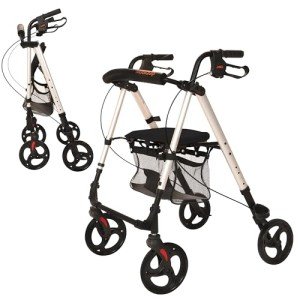
Hugo's Rollator Walker has an inbuilt seat that allows users to relax from walking. It also comes with hand brakes that lock so the walker won't roll away if the user is seated.
This mobility aid is ideal for those who wish to be mobile in uneven or rough terrain. It can be folded flat, making it easier to carry.
Brakes
A rollator with a seat is a great choice if your loved ones require extra stability and balance in order to stay safe from falling. In contrast to standard walkers, which require more strength from the upper body to lift, a rollator can be controlled with the push of a lever or button. This means that those who are unable to move will feel less fatigue and exhaustion.
Rollators are available in different wheel sizes and brake options which allows you to select the right model for your particular requirements. Smaller wheels (6" or 7") have a smaller turn radius and are ideal for maneuvering in tight spaces. Larger wheels (8" or greater) provide a smoother riding experience on uneven terrain.
Many rollators have both foot and hand brakes, which means you can choose what is most comfortable for you. Hand brakes operate by squeezing a lever, while foot brakes are engaged by pressing down on a pedal using your feet. Both types of brakes work, however, hand brakes are more user-friendly.
The seat on a rollator will provide you with a comfortable place to sit when you need a break from walking. It can also help keep you from further injury and strain. Your walker's chair will likely be padded to provide the highest level of comfort. However, some people prefer seats without padding for the added security and safety they offer.
When you've found the ideal walker for you It's essential to understand how to operate it and adjust it properly. The first step is to adjust the height of the handle. To do this, ask your loved one to stand up straight while you take a measurement of the distance between their hips and the floor using a tape. Once you have the measurement then pull the handle upwards to adjust the Walker.
The next step is to adjust the angle of the handle to a position that is most comfortable for you to hold. This can be done by grabbing the handle with your hands and pulling them firmly apart, or you can loosen the screw on the back of each grip, and turn or turn it until you are in the desired position.
Wheels
Rollators with seats are great for those who want the stability and support of a walker but don't need the weight capacity or height of traditional walkers. You can choose from a variety of colors and weight capacities to find the right one for you. They are usually equipped with brakes that slow you down on slopes and seats that let you relax when you need to. You can also purchase accessories such as bags, baskets cane holder, or smartphone holder to keep your belongings close to hand and free your hands.
The wheels on rollators could be made from rubber or polyurethane and are formed according to the model. The dimensions of your wheels could have an impact on how well your rollator operates and performs. Smaller wheels can be used indoors for maneuvering in tight spaces. Larger wheels (8" or greater) are ideal for outdoor use and are able to handle more difficult terrain. rollator walkers with seat mymobilityscooters.uk come with non-marring, soft gripping casters that don't scratch up indoor floors or dirt paths in parks.
There are also three-wheel rollators that are smaller than four-wheel models, and can make more precise turns. They are generally lighter and easier to maneuver. Some people prefer three-wheeled walkers because they are easier to balance, and less likely to tip over when walking up or down stairs.
The majority of models come with dual braking systems that are similar to brakes found on a bicycle. These brakes are easy to engage or disengage and provide more control when braking and when sitting. Some models even come with brakes that lock so you can sit down on the seat with no walker rolling away.
The majority of those who use a rolling device need to maintain it. To avoid damage and corrosion, it is important to clean your wheels, brakes, and handlebars. You should also make sure to check your walker on a regular basis for signs of wear and tear. If you notice any problems, it's best to consult with a medical professional for maintenance advice.
Seat
The seat on a rollator walker allows you to relax when you need. This can be beneficial for those who require a little more stability while walking or are having difficulty lifting their legs due to arthritis or injury. Some models have a handy storage pouch underneath the seat for storing items such as blankets, food items and TV remotes. Many models of this type also have a backrest that can help you feel more comfortable when using it.
The brakes are an additional important aspect of a rollator that comes with a seat. You must be able to stop the device with ease and safety in particular if it's necessary to sit down. Some walkers feature the lever-style brake, which is easy to use and may be locked in place for additional security. Others have a brake pedal that is more traditional and requires you to push down on it by using your feet.
Some of the top rollators have large wheels that are better suited for outdoor use. These wheels are usually placed in the front of the frame and can take on rough terrain more easily than smaller wheels. These models also assist you navigate narrow hallways and doorways. Furthermore, some models come with a loop-lock hand brake that prevents you from rolling the walker accidentally even when you're not using it.
Most rollators come with an storage bag underneath the seat for storing items. This is helpful for those needing a break, or have trouble lifting their legs because of an injury, arthritis, or other conditions. Some of these walkers have a backrest that will help you feel more comfortable.
One of the most appealing features of this model is its height-adjustable handlesbars and seat. It can be adjusted to three different positions, allowing users of all heights to be comfortable while using it. It is also light and folds easily for easy transportation. It also comes with an upholstered seat that is comfortable and hand brakes. It comes in a variety of colors and is easy to clean. Additionally, it comes with a carry basket to hold food or other items.
Stores
The type of storage that is available on a walker, or rollator can have a significant impact on the comfort and utility of the product for a specific user. A walker with a seating area is a good example. It allows the user to rest and sit down if necessary during a walk. This is an important benefit for anyone who needs to take a break during an extended walk or is unable to use their legs due to injury or illness.
The seat also serves as a spot to store things that are easily accessible when using the walker, like trays or bags. They can make the walker more efficient and less cumbersome to use. Some models even have a basket or pouch located beneath the seat to store personal things.
Some models include additional features such as tray attachments cups, glide attachments. These attachments can enhance the efficiency of the walker by making it easier to move, and also preventing damage to carpets or floors.
Another crucial aspect to take into consideration when shopping for a walker with seat is the weight capacity. Standard walkers can handle 250 to 350 pounds. However, if you need a more powerful model, there are bariatric models available that can handle 500 pounds.
Rollators are more popular than walkers, and typically come with a seat that allows the user to rest and stop when walking. The front wheels are usually pivoting and have hand-operated breakers to enable them to maneuver in tight spots. A majority of them can be folded to make them easier to carry in a car or a bus.
The wheels or casters of a rollator are generally larger than those on a two-wheel walker. They usually have a tread designed to prevent the device from skidding and marking indoor surfaces. The larger wheels are also more convenient for outdoor use, and also over rough or uneven terrain. The most commonly used wheel size is 6", but there are models with 8" wheels for more rugged outdoor uses.